Showing posts with label pet peeves. Show all posts

Friday, September 7, 2018

Are you doing your grand plie correctly? Are you sure?

When beginning dancers first learn to do a grand plie, teachers try to guide them with three main alignment corrections (it's always 3, isn't it?):

1. Keep your spine straight - don't tuck or stick out your derriere.

2. Send your knees out over the toes - don't allow them to roll in front of the big toe.

3. Let your heels come off the floor gradually - don't pop them up and force the arch.

As I watch dancers advance and learn to incorporate more alignment corrections, I've noticed that the 3rd correction about the heels seems to be the last one that can be applied properly. In terms of the sequence of understanding, it appears that the first two are easier to comprehend and apply to our bodies. After all, we can see in our mirrored reflection whether our spines are straight and if the knees are rolling forward of our toes.

But the feeling of heels lifting too soon (or being popped up) is a challenging one for dancers to find. Remember that lifting the heels too soon can have major repercussions, including:
*shortening the tendons and weakening them
*constant engagement of calves resulting in pulled calf muscles
*crossover to lifted heel before pirouette

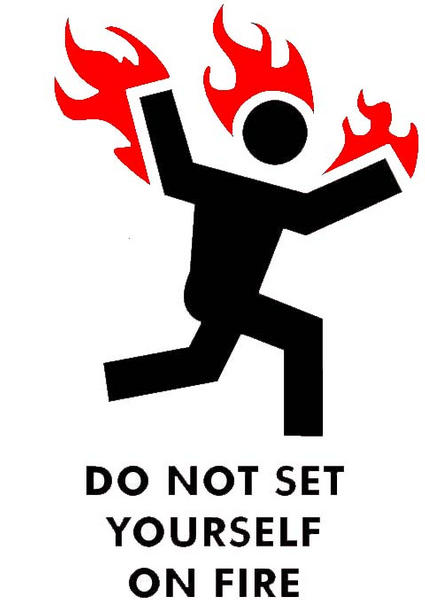
 DO NOT
 
Try this next time you're at the barre for plies in first position:
--find your balance evenly on both feet but test whether you are "sitting" back by gently lifting the heels off the floor and setting them back down.
--imagine a weight at the base of your spine pulling you straight down to the floor.
--begin to open the plie at the top of the legs - don't initiate in the knees; they come later.
--allow the thighs to part and the knees to open and extend beyond the center part of the foot and the middle toes.
--feel the calves and Achilles tendons lengthening as the knees open.
--keep your spine straight and feel the lower belly engage as you get closer to the floor.
--the knees will naturally pull off the floor - allow them to do that - but instead of bringing the heels closer to your pelvis, bring the pelvis closer to your heels.
--let me repeat that: instead of bringing the heels closer to your pelvis, bring the pelvis closer to your heels.
--to come back to standing from the grand plie, put your heels down first, feel the Achilles and calves engage, and then initiate the return by pulling in your inner thighs, not your knees.

DO

Hope this helps! Happy and healthy dancing~

Friday, August 31, 2018

Pet peeve: don't lead with your chin

There are many ways of learning or performing a cambre forward, colloquially known as "port de bras." Cambre is more technically correct because cambre just means bend, which we can also do to the side and back.
Joy Recital by Trish Fawver, CC license
There are many ways to bend forward. Or not at all.

Too often I see dancers lead with their chins as they go toward the floor rather than turning their head to the side like they are peering under their arm. Chin-leading also can crop up in pirouettes (or its converse, chin pulling-back).

Here are my hints for a pleasing-to-the-eye and easy-on-the-body cambre:

Going forward (or en avant) -
1. As you begin the bend at the waist, keep the arm outstretched in second position so it extends away from the center of the body.
2. Turn your head toward your arm as if you are laying your cheek against a table, lining up the chin with the inside of the elbow.
3. Maintain the position of the head relative to the arm as you bend farther forward.
4. When you reach the lowest point you can go, you will be twisted so can see the side (or back) of the room.
5. At this point, gather the arm that was in second to what would be a fifth position if you were upright and feel as if you are connecting the top of your head with the palm of your hand. At this moment, you can turn your head so you face your ankles.
6. Then in one movement, reach your hand away from your body and pull yourself back to a standing position, maintaining the same head/arm alignment and space as you do so.
7. Once in an upright position, open the arm to second.

Happy dancing~


Friday, July 13, 2018

My beach blog!

Okay, I'm not on a beach but I do wish I was! This post is beach-themed. I had a few thoughts I wanted to send out to everyone and they all seemed to fall into a beachy sort of thing so...

Courtesy Kathryn Greenhill, creative commons lic
My beachy thoughts on this Friday afternoon?

1. A pirouette tip: Grab your beach ball with your inner thighs! When you're in your fourth position, preparing for an en dehors turn, imagine your upper thighs are wrapping and squeezing a giant plastic beach ball. When you releve for the turn, don't let go! Keep the inner thigh muscles activated to hold onto the ball and give you a spiraling action as you go upward. Release the ball as you lower down to your finish, gradually letting the ball go.

Courtesy Valentina powers, creative commons lic
 2. A pet peeve tip: Stick your toes in the sand! One of my biggest pet peeves are toes that leave the floor during battements tendus or temps lie. You lose the opportunity to lengthen your legs and feet when you allow the toes to lift off the floor, even briefly. Instead imagine your toes are stuck in the sand on the beach and the waves are lapping at your ankles and when the waves recede, your toes are sucked into the wet sand.

Courtesy Hilton Resort
 3. A port de bras tip: Do the backstroke to get your shoulders moving! When we do cambre back or a grand circular port de bras, we are trying to articulate all parts of our back: the upper back, the middle and the lower. The upper back is the hardest because we are usually pretty tight in the muscles at the front of our chest and in our shoulders (we do a lot of work at our computers and phones and we sit in our cars for hours). But an articulate upper back is one of the most beautiful parts of our ballet lines. As you bend backwards, imagine yourself doing the backstroke in the water. You don't twist your whole upper body as you do this but rather, you keep the back steady and sweep the arm up and behind you.

Natalie Coughlin courtesy Kinney Turtle, creative commons lic
Happy summer dancing, everyone! Stay cool~

Thursday, October 5, 2017

Javelin your pique!

Yes, that's correct. I just used "javelin" as a verb!

Jessica Ennis, British track & field superstar
One of my biggest pet peeves as a ballet instructor is when students bend their knees as they pique to either a turn or a balance and no amount of my shouting, "Keep your knee straight!" seems to help.

Pique is a difficult concept to grasp. In our daily lives we always bend our knees when we walk or run or climb stairs, and certainly in ballet class, we are admonished to bend our knees during plies at the barre or when we jump in the center. But in order to pique properly, we need to keep our entire leg straight and to engage our hamstrings and quadriceps.

Let's use an example with pique arabesque. Here are the basics:

1. With your right leg in tendu devant (knee straight!), prepare with a fondu on the left leg.
2. Push off the left leg and arrive en releve with the right leg completely straight (toes pointed as the foot hits the floor; don't anticipate the releve by flexing the toes).
3. Pull up on the right side of the body so your torso doesn't pitch forward but remains upright.
4. Point the left foot and send the leg up into a long arabesque.
5. Finish with a failli through first position en releve and bend the right leg as the left leg swings through to tendu derriere croise.

Okay, that's simple enough. Except many, many dancers insist on bending the knee in step 2 and end up "climbing the stairs" to their balance en releve. How can we avoid this?

Let's go back to the javelin. I'm sure all of you can picture how a javelin thrower launches her javelin. She heaves it over her head and it arcs up through the air, landing with one end sticking straight into the ground.

In the example above, your right leg is the javelin and your left leg is Jessica Ennis. Launch your javelin in an arc so it goes up and out before landing in the ground. This will mean you place your toe (the sharp end of the javelin) into the ground a foot or more ahead of the rest of your body.

Think LAUNCH then ARRIVE. You launch your javelin and then the body arrives behind it.

Hope this helps! Happy dancing~


Tuesday, June 21, 2016

The Art of the Tendu

Pet peeve time...

When a dancer, during a fast battement tendu combination at barre, allows her toes to lift off the floor and instead performs a battement degage.

Keep. The. Toes. On. The. Floor.

It's lazy.

It's sloppy.

But most of all, it defeats the purpose of the exercise. I've blogged about the various elements of a barre in this post and what each is intended to do prior to coming to center, so I will just focus here on tendu.

The battement tendu, when performed slowly in either 1st or 5th position, helps warm up our feet and ankles and allows us time for proper articulation. We then take that articulation and apply it to a slightly faster combination with a new emphasis on stretch - we're still articulating the whole foot, ankle, and toes, however. Regardless of the speed, we still need to point the foot and engage all the muscles from ankle to toes. As the exercises get faster, it's even more crucial that we keep the toes on the floor because if we don't, we discard the work we just did.

Additionally, when you work really hard to keep the faster tendus on the floor, you will be engaging the inner thigh muscles, the external rotators and the glutes - all of which we need to help maintain our turnout in the center and perform fast allegro work. If you don't use those muscles but instead let the toes leave the floor, you end up using the quads.

And finally, it's simply not a clean line. When we perform degage, we are actively engaging our muscles to get the foot off the floor but when we do it during tendu, it's by accident. We are not training our legs and feet to complete the line so when we come to the center, the foot looks like a floppy fish on the end of a line.

Don't be a floppy fish.

Articulation. Strength. Line. Keep the toes on the floor.

Happy dancing~

Friday, April 8, 2016

What is the purpose of barre?

Yesterday during a class I was taking, a student asked a technique question of the teacher. Even though I knew the answer to the question, it was not my class so I kept my mouth shut.

(Note: this is exactly the right thing to do when someone else asks a question. Nothing. Say nothing. Even if you have the answer or think you do, stay quiet and let the teacher answer it. Jumping in with your response only invites others to do the same and soon, all hell has broken loose and the teacher has to get things back on track which is, frankly, a pain.)

Back to the class and the question...

Yes, I teach at this barre.
 Since this was an advanced class, many of us were wondering why this question was asked. Shouldn't advanced dancers understand technique, especially at barre? This led me and another student, a professional ballerina who also teaches, into a discussion about barre and its relationship to the rest of class and to performance. As we talked, we realized the student had asked a question that, regardless of its appropriateness or timing within the class itself, didn't make sense. We concluded that the person who asked it likely didn't understand the purpose of the movement she was asking about as it related to the greater picture.

It's important to understand why we do barre and what purposes it serves for later classwork and performance.

1. There is a sequence to barrework that warms us up, beginning with gentle plie exercises that warm up our hips for proper turnout, followed by slow battements tendus that help us articulate our feet and toes, all the way through core conditioning with grands battements and ankle strengthening with petit battements.

(This sequence is repeated in the center: from small to large, slow to fast, etc.)

So number one, barre is to warm up all our muscles and ligaments to reduce the occurrence of injury.

2. Muscle has memory. While ballet barre may seem repetitious, with arms and heads often held in the same positions all the time and most exercises performed en croix, we are teaching our brains to make connections - and later corrections - automatically, thus freeing us from having to think all the time. We don't need to think how to sousous, we simply do it. We don't think how to do grand rond de jambe. We just do it.

(Similarly, in the center, we often repeat sequences of steps such as tombe pas de bourree or glissade jete so they become part of our body's vocabulary and we don't need to break down each component.)

So number two, barre is to imprint vocabulary on our brains and bodies.

3. Preparation for center. This is, perhaps, the most important purpose of barre: to get us ready to do things unassisted. As I like to tell my students, dance is shifting your weight from side to side, forward and back, up and down. If all we did on a stage was work one leg at a time, the dance would be quite boring. So we use our time at the barre to get ready to change direction quickly, to shift our weight from one foot to another, to align our bodies properly so they don't fall when we don't have anything to hold onto.

For an advanced class, I might focus barre on very fast tendus or degages that have intricate patterns so the dancers are constantly shifting weight, which they can then apply to the quick footwork of petit allegro.

For a beginner class, I might ask them to hold balances en releve in different positions to strengthen their cores, feet and ankles, which will help them when they do an adagio combination or jumps.

Often when I take class for myself, I ask myself what the purpose of a particular movement is and where in the rest of the class can I apply it. Knowing the answer gives me renewed focus on the step so I get the most out of it.

I love barre.
Bottom line: don't just go through the motions at barre, assuming you know what a tendu is or how to execute a rond de jambe. Use it to establish your lines and find and strengthen your center so you can dance with confidence. Take the time to make mind-body connections so you can perform unfettered, so you can free your mind to express itself and explore choreography.

Happy dancing~

Tuesday, March 15, 2016

Pet peeve: point your feet!

Every once in a while I find myself philosophizing (some might call it "ranting" but I am merely passionately opinionated) with my students. I see something and then I have to say something. Last night with my beginners I had to stop the class after we did a center pirouette combination to talk about pointed feet.

Here's the thing:

You. Must. Point. Your. Toes. Every. Time. They. Leave. The. Floor.

Unless you are taking a modern class or the choreography specifically calls for a flexed or relaxed foot, please always point your toes. Always. ALWAYS. ALWAYS!!!!

Pointing your toes (and of course your toes are an extension of your arched foot and your ankle which must also be engaged and stretched and yes, pointed) accomplishes so many things when you dance:

1. It finishes the line in a tendu or arabesque.

2. It helps spring you off the floor when you're performing allegro.

3. It gives you a point to stab into your knee to hold the retire during pirouette.

4. It guides the audience, aiming their attention where you're traveling.

5. It engages all of your muscles to give the appearance of a longer leg.

6. It shows off the thousands of hours of barre work you've done.

I'm certain there are more reasons to point your toes but remember that a beautifully-pointed foot is the ultimate symbol of a strong dancer. No matter how many turns you do or how high your extension is, pointed toes show that you are a finely-tuned dancer and that you are dancing with your entire body.

Happy dancing~
Photo: Matt Paish (doingtraveling.com)

Monday, August 3, 2015

"Never run back the way you came" - and other absolutes in ballet class

Oh the many things students do in class that make me chuckle or wince.

1. Never run back at the group coming behind you. They will kick you or get mad at you or, at the very least, get confused. If you finish the combination - or you forget it - just keep moving forward or downstage.

2. Always start and end your jumps with demi-plie. I cringe whenever I see students finish a jump with a straight knee. Ouch!

3. Similarly, always start and end your pirouettes with demi-plie. You must use one to get momentum going and end with one to finish smoothly, not like a mannequin.

4. Never bend your knee before you pique. That's a big fat N-O. Instead bend the knee of the leg you're pushing off.

5. Never do rond de jambe en l'air with your hand while you're doing it with your leg. I see this sometimes and it makes me laugh (although, honestly, I do it sometimes when I teach!).

6. Never look down at the ground, especially before a turn or a jump. If you must see the floor for whatever reason, just cast a quick glance down, don't actually drop your head. It changes your alignment on a turn and works against you for height in a jump.

Any others you can think of? Happy dancing!

Monday, March 16, 2015

Pet peeve: Flyaways!

I'm not talking about those little wispy hairs that need to be gelled down before a performance.

I mean flyaway arms.

When I teach, especially students who are new to ballet, I emphasize clean lines and simple arms. But when I encounter more experienced dancers, even advanced dancers, they sometimes have flashy and ostentatious hands and arms which perform fancy little flourishes when they are at the barre.

Some examples:

--an arm that lifts far above the shoulder in second position and one that forms an undulating S-curve on a grand plie.
Flyaway arms in second

Proper arms in second
 --an arm that is raised high above the head in an arabesque, in which the hand is nearly straight up and down like a salute, rather than one that is placed in front of the nose, with eyes over the middle fingers.

--arms that cross as they are lifted from fifth en bas to fifth en haut, instead of keeping a circular arm.

--hands that break at the wrist when they are held in fifth en bas during small jumps.

 
Bad fifth en bas

Proper fifth en bas
Many dancers think flourishes such as these make them appear more delicate but instead, they look weak. Arms that are simple and clean emphasize the line of the body.

More important than the look, however, is how strong and simple arms help lift you during jumps, adagio, and turns. If your arms are weak, that usually means the back muscles are not engaged and if that is the case, you have that much more work to do with the rest of your body. Let your arms help you!

*Please note in the "bad" photos above that the young woman is not actually performing ballet but the photos are representative of the arm positions I am describing.

Monday, November 4, 2013

A "point"-ed pet peeve and a student's question

1. From me:

When you're driving your car, isn't it annoying when the driver in front of you puts his turn signal on long before he needs to turn? You become fixated on that signal because you don't know when or where you will have to slow down in order to accommodate him.

The same is true when you dance, when you pique or balance or even chassee. Some dancers flex their toes in anticipation of stepping up to the turn or out to the balance and what do we see? An ugly flexed turn signal.

I'm going now!  Nope, here I go. Yes, here it is, here is my pique arabesque!

This is a particular pet peeve of mine, as a teacher and as an audience member. There is the esthetic of it (awkward and ugly) and the technical aspect (your foot isn't pointed or straight). Always - always -always point your feet all the way down to your toes.  The aim is to melt the foot into the floor with every step and to roll through the demi-pointe softly. When you pique, stab those pointed toes into the floor and only bend them when you absolutely have to. It will look much better and the line will be complete.

2. From student:

 Why would a teacher tell me to work in 3rd position instead of 5th? Which is better? Does it matter?

Third position is kind of a midway point: the heel of the working leg sits at the arch of the standing leg, rather than the toe. It can be useful if you are brand new to ballet (although I never use it with my new students) or are injured, as the turnout is not as forced and the knees can fit more comfortably, if necessary.

However, it is really more of a transitional position, as we usually think of working through 3rd on the way from 2nd or 1st to 5th when we do tendu or degage. It can help students feel the tops of the legs closing more tightly.  I use it to emphasize a closure on glissade for instance, which can often be quite wide and loose for new students.

Is it better? No. It's useful but not better. For one thing, when you do not close your feet to 5th, you are not engaging your inner thighs so center work like allegro will not be as smooth or as quick as you'd like. By working in 5th at the barre, you are more likely to feel and engage the muscles you need to use to stabilize yourself in the center for adagio as well.

Does it matter? If you are injured, by all means, work in 3rd until you can comfortably tighten to 5th. Teachers who insist on 3rd are concerned with forced turnout and about the potential for rotating the knees too tightly and ultimately developing tendonitis or other knee pain. But if you work in your turnout and do not force it, you should be able to work in 5th rather than 3rd.

Sunday, November 25, 2012

Leigh's pet peeves...arms!

...because I certainly do have pet peeves in other parts of the class.  Okay, here are a few to watch yourself for next time you're in class:

Egregious Error #1. "Flicking" the hands in an allonge line. Ooh, does this one bug me!  I will see a dancer fondu or pique to a lovely arabesque and then, rather than roll the shoulder back and stretch her arm, she merely flicks her wrist as if to say, "Voila!"

Why this happens: Typically, the hands are whisked back when a dancer is losing her balance. She may be at the barre or in the center and attempting to hold an arabesque but when she takes both hands off the barre or raises them over her head, she starts to fall.  She throws the hands up and away.

How to avoid this: Remember that allonge comes from the French meaning "to lengthen," so you want to start your line from the back.  Gather the impetus for the stretched line from behind the shoulder, under the blade, and then roll the shoulder down and back; the arm stretches behind the head from there and continues to the fingertips. Think 3-dimensionally with the arm so it does not skip fifth en haut. Do not break the line at the wrist and be sure to turn the head to follow the arm as it moves.

Egregious Error #2: "Magic arms" during grand jete developpe. More "Voila!" arms.  As a dancer throws her leg in front of her for a jete, she also throws the arms out in front of her, jutting them as a magician might when he gestures to a lady cut in half.

Why this happens: The dancer is concentrating so hard on the leg doing a grand battement developpe that she "develops" the arms as well. The arms and hands merely mimic what is happening with her front leg.

How to avoid this: Again, think 3-dimensionally with your arms and let the gesture begin with the middle of the back.  Gather the arms in fifth en bas as you plie before your jete, bring them through the 3rd position via 1st position so they take up more space.  This way the arms will not look like crocodile jaws either.

Egregious Error #3: "Magnet hands" in petit allegro.  Imagine your thighs have magnets and so do your hands and when you jump, they attach themselves to each other.  Not pretty and not efficient, either.

Why this happens: Well, you want to get high off the ground, don't you?  Contrary to popular belief, your shoulders do NOT help you jump higher.  I joke, of course, but it's true.  Many times, a dancer will push very hard off the floor with her feet but rather than use her plie to get a greater lift or spring her toes for more impetus, she uses her shoulders. Then the arms stiffen and the hands go straight down to her legs.

How to avoid this: When you do petit allegro steps like changements or entrechat quatres (or trois, etc.), remember to bend your knees and push your heels off the floor. Roll through your demi-pointe and spring with your toes.  As for your arms, when holding them in a low fifth, be sure to keep space between them and your legs - once more, think 3-dimensionally.  Leave some breath under your elbows and imagine a cloud of air lifting you under your elbows and upper arms.  And yes, engage your upper back!  There are muscles there too, remember, and they will help get you off the ground.

Happy dancing~

Wednesday, May 9, 2012

Please plie...


If you're going to pirouette, please plie.

If you're going to do petit allegro, please plie.

If you're going to tour jete, please plie.

If you're going to work en pointe, please plie.

Save your knees - bend them, please.

Saturday, September 26, 2009

Pet peeves in ballet class

As a teacher, these are a few of my least favorite things to see:

--Heels lifting off the floor during demi-plie at the barre. Keep them down, down, down! Not only do you shorten your Achilles tendon by keeping them lifted but you also will develop a bad habit that you will take with you to the center. You can't get height or build strength if you do not put your heels down.

--Toes lifting off the floor during rond de jambe and tendu. Tendu means "stretch" and you're not stretching if you allow the toes to come off the floor. Instead, point the toes and feel the legs lengthen all the way to the top of the thigh. By consciously feeling the floor with the baby toe, you will distribute the weight properly which will result in better positioning for releves and pirouettes.

--Hands flinging during allonge. To allonge means to draw out, stretch, lengthen the line. In particular, when we talk about the allonge line for an arm, we mean to rotate the arm up and back, away from the shoulder. Allonge does not simply take place in the wrists and hands. Start with the shoulder lifting up and back and then lengthen the arm away from it, back and up on the ecarte line, all the way to the hands.

--First arabesque arm that reaches higher than the head. The hand should be directly in line with the nose, no higher, and the arm straight at the elbow (unless you are doing Cecchetti in which the arm is often slightly bent at the elbow). But no matter what style you are studying, do NOT lift that arm above your head. It's an affectation that has repercussions through the rest of your body, destroying the line.

Next time I'll talk about things I do like seeing from students!

Happy dancing~