Showing posts with label new year's resolutions. Show all posts

Sunday, December 26, 2021

Use it or Lose it! A mantra for 2022

Hello beautiful dancers~

We're not yet finished with 2021 but I am starting to think about what 2022 will look like. If, like me, you were disappointed in 2021, I think it's because we expected "normal" to return. That, according to many experts, will never happen and we need to move on from that. 

But if you looked very closely, 2021 was a massive improvement over 2020!

~Miracle vaccines became available to everyone in the space of a few months. 

~Dancers in my area were able to return to the studio (with masks, but still, such a better place to be than in your living room).

~Some dance companies like mine performed in a theater with a real live audience (including Fred Armisen! What?!).

~Many people, including myself, traveled again to see loved ones.

Remember 2020? NONE of that happened. 

Okay, so let's think about 2022. We all wanted to use the pandemic as a learning tool, right? Some of you learned to bake or play music; some of you realized you hadn't been spending enough time with family or friends and made resolutions to see them more frequently. It's natural for us to want to come out of this (or make peace with still being in it) by creating new rituals or life lessons.

Honestly, I have a hard time sticking to promises to "be good to yourself!" or "seize the day!" or "live every day like it's your last!" Those are great things to remember but most of the time - for me - they don't stick. Something critical will happen - like an accident or a health scare - and in the moment, I will think, oh my gosh! that could have ended terribly! I'm so grateful it didn't! In reality, I think it's hard for any of us to live by those sayings because, well, life goes on. You have to work and buy the groceries, feed the dog and pay the rent. Everyday things tend to trump the big once-in-a-lifetime things because they press on you to get done. It's hard to tell the DMV you didn't get the smog check because you were seizing the day.

What's easier for me to use as a guide for living is a practical saying, something that is not just a personal philosophy or wishful thinking but actually something that I can follow. So this is one that I think can guide us all, whether we are dancers or just regular humans who want to dance:

USE IT OR LOSE IT.

The best thing about this very practical saying is that you can apply it to a huge range of things.

1. Your body (the obvious one, of course). We've long known that joints require constant lubrication which breaks down as you age. Movement = lubrication. Movement is what minimizes inflammation (i.e. arthritis) so if you continue to exercise daily, you keep your body - spine, knees, shoulders, etc. - going longer and with less pain. Daily movement also keeps your heart healthy, your muscles strong, and improves your balance - all of which are important for aging bodies. And no matter what age you are now, your body is aging. That's just life, lol.


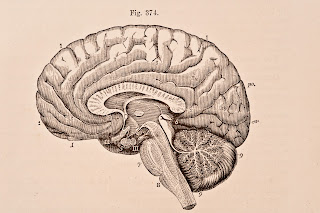
2. Your brain (the second obvious one). Many of us experienced brain fog during the pandemic, whether we were infected with COVID or not. It comes from being quarantined, from not being able to get out and interact with others, and from never-ending Zoom meetings. Being in lockdown, uncertain and anxious for so very long results in depression. If you haven't felt it, you know someone who has. This is a sneak peek of what our brains do when we age: it's harder to remember names and places, harder to get excited about doing something we used to love, harder to envision a future that is different than what we are experiencing now. Keep your brain active through reading (don't just listen to a podcast or watch a YouTube video), fun puzzles like crosswords or Sudoku or word scrambles, and writing. Each time you challenge your brain with a new word or concept, it starts to form new grooves in it (remember, the human brain typically stops forming neural pathways by young adulthood but we can continue to forge new ones if we want to). Creating new pathways and forming new connections contribute to a healthier brain.

3. Your good dishes (or furniture or wardrobe or perfume). What are you saving these things for? What day are you waiting to wear them or serve food on them or sit on? The Queen of England is not coming to visit you any time soon. You can substitute any celebrity you like in that sentence. Seriously, though, why not use your candlesticks when you're eating a Wednesday meatloaf or a Friday pizza? Unless you have collectible Star Wars action figures that lose their value as soon as you open them, then you're wasting an opportunity to feel good, look good or smell good.

4. Your friendships (romantic, familial or just friends). The phone rings and we see the caller and let it go to voice mail. They're gonna want to talk forever and I don't have time now. Or there's a text or email that you don't reply to. They want to get together and I don't have time now. Well, what are you waiting for? What's more important? If we have learned anything from the pandemic, it's this: don't count on tomorrow or next week or next month. Not to get too morbid but, sad fact, you or your friend might get sick and that day won't come. Isn't it better to pick up the phone and say hello now? Or make a plan to grab a coffee some afternoon? If the person talks a lot, then tell them you have a "hard stop" so they know in advance you have to leave. Trust me, you will feel so much better when you do this. You will ask yourself why you waited so darn long.

5. Your dance class (you knew this was coming, lol). Everything in the previous paragraphs - body, brain, possessions, friendships - is wrapped up in a dance class. Dance helps your body and brain stay young and healthy; a class is an opportunity to dress up for yourself; our dance community surrounds you with friends. You don't need to be a professional dancer to get something (some things) from a dance class. Lifelong learning keeps your brain engaged and regular exercise strengthens your immune system. Friends help keep you sane and fulfilled. And when you get your fancy leotard or leggings out, put a drop of your favorite essential oil on your wrists, and snap a selfie in front of the barre, you feel good about yourself for yourself. Mental and physical well-being all in one place: dance class.

I wish everyone a very happy new year! Please stay healthy if you can, try to avoid stressful situations that can tax your immune system and your patience, and post this motto above your desk:

USE IT OR LOSE IT!


Thursday, January 9, 2020

First Newsletter of 2020 and a Personal Teaching Resolution

Happy New Year, beautiful dancers! I'm excited about so many things coming in 2020 (company intention on 1/12, new Sunday class starting on 2/2, a big fundraiser for the company, and of course, season 4 of Sweet Sorrow, A Zombie Ballet!). I put it all in a newsletter which you can have delivered to your very own inbox if you'd prefer to read it there - just click on the browser link below to subscribe. I only send it once a month and I promise I won't spam you.

Before I post that, however, I'd like to talk about a personal resolution I want to make in my teaching:

I will strive to take gendered pronouns and traditional gender norms out of my class.

This will be, I admit, difficult for me. My natural reflex is to greet people as "ladies and gentlemen," to divide groups or partner dancers based on gender, and to identify steps as gendered. I don't mind the reference when it's used with me but that's me and I'm ancient.

However, I am conscious of gendered roles in my choreography and I do what I can (and what fits the story) to not fall prey to the easy nature of stereotypes. For instance, my Rosaline is no frail princess waiting to be rescued by Benvolio; my pointe partnering includes women partnering women; and every woman's role in Hotel at the End of the Universe is a feminist one. I work very hard to empower women, on the stage and in the studio.

I have already begun excising "ladies and gentlemen" to call out my groups, instead saying "dancers" when I can. Just as I ask permission before touching someone in class to make a correction, I will also ask dancers if they prefer a specific pronoun be used with them when it feels appropriate, and I won't assume the answer.

As with all of ballet, the repetition of certain actions on a regular basis soon becomes muscle memory. We do a million tendus so we don't have think of how to do one; similarly, the more often I can refrain from gender norms in my class and choreography, the less cumbersome it will appear - and I will only have to think about what to do with the dancers, not how to address them.

~HAPPY 2020~
View this email in your browser

January 2020 schedule

Classes are all on as usual throughout the entire month. Reminder: Monday, Wednesday, Thursday and Saturday classes are at Inspire Dance Studio; Tuesday classes are at Live Arts LA. View my full schedule here (scroll to bottom of page).

Fun photos! Above is one of my favorite pictures from the holiday classes this year: Family! At our Christmas Eve class, Monica brought her daughter Taylore, Laila brought her sister Ashna, Patty brought her son Brandon, and Gwen brought her son Nik. Such a magical time to share our ballet community with family members. Thank you! And below are three more: group shots of the Christmas Eve and New Year's Eve classes and Nicole with Blossom in the studio (just because it's cute!).
 

Special notes

Beginning February 2, I will be teaching a NEW CLASS on Sundays: Advanced Beginner Ballet (which is the same level as my Tuesday/Thursday classes) at Inspire Dance Studio. 11AM-12:30PM. (Note: I'm considering adding a 1/2 hour of pointe after. If this is something you'd be interested in, let me know via email or in person.)
 

Featured technique tip!

In one word: LIFT! Tip of the Year 2019

More fun links:
I write book and movie reviews for the amazing website, Dance Advantage. Here is a review about The White Crow which I thought was...well, you'll have to read the review to find out!
 

LPBC News

Company Intention for the 2020 season will be on Sunday, January 12, 12-2PM at Inspire Dance Studio. Everyone is welcome to participate if they would like to be part of the company's 4th season. Please familiarize yourself with our Mission Statement and Membership Requirements. Please also sign up in advance so we have an idea of who is coming. (Note: this is not a technique class per se. While there will be some exercises at the barre and in the center, this is about getting to know everyone and learning what we're all about. Think community rather than class.)

Facebook
Website
Copyright © 2020 Leigh Purtill Ballet, All rights reserved.

Thursday, December 26, 2019

Year-end technique tip for 2019

As we bring the year to a close, I tried to think of one correction that represented 2019.

Was there a common thread among the issues I seemed to constantly be correcting among my students?

Was there a single thing that I seemed to be focused on primarily?

Could we condense 2019 into one technique tip that everyone could learn from?

I talk so frequently about turns, about visual images that help us in the center, about performance quality, about technical details...was there one that connected everything? And then it hit me:

LIFT.


It is the number one thing I have been talking about throughout the entire year: lifting.

Lifting the sides of your waist at the barre or in the center.

Lifting your heels on turns and balances en releve.

Lifting your eyes so you don't direct your energy into the floor.

cc lic Shannon Clark
Lifting your elbows on chaine turns.

Lifting your collarbones on turns and promenades.

Lifting your back on arabesques and turns.

Lifting your core on jumps and developpes.

I talk a lot about lifting your rib cage out of your pelvis, which gives you more room under your hips for fast footwork and bigger battements. We especially talk about this in pointe work. You want to move your rib cage slightly forward when you bourree, when you echappe, when you turn. The only way to accomplish this is to feel your torso lift up and out.

cc lic Oregon State University

There is, of course, an internal component to this notion of lifting. Often when we feel exhausted, mentally or physically, we express that in our posture: our shoulders roll forward, our centers collapse, the backs of our knees soften. Sometimes we don't even realize we are doing that; it has become so much a part of us. And it doesn't help to commute long distances, to sit in front of computers at desks for so many hours, to stare down at our phones all the time. Those activities, seemingly innocuous, take a huge physical toll on us.

Ballet combats this. 

Ballet - wait for it - battles it.

(Ha! Dance joke!)

Seriously, though, we are constantly adjusting our alignment in ballet and the smallest details can have a great impact. A tilt of the pelvis, a curl of a toe, or an over-rotation of an ankle can lead to big problems when we walk or drive or sleep. Conversely, making those minor changes can solve lots of real-life issues, not just in dance class:

--Finding a new way to hold your upper back can lead to less fatigue when you're driving.

--Engaging your core muscles can energize you when you're at your desk.

--Pulling up your knees, supporting your arches, freeing your neck from tension - all are ways to prevent you from being tired and creaky and sore.

And when we feel good physically, that can help improve our mood. And vice versa.

cc lic courtesy tshein

So I will add one last tip to this: do what you can to lift your mood.

That can happen just by walking into the studio, by surrounding yourself with your friends in a supportive environment, by focusing on something other than work and life problems, by physical movement and endorphins, by giving yourself permission to feel bigger and prouder and confident. In class, we can be lifted by giving others a lift: when we encourage and support others in class, whether they need an emotional boost or a helpful suggestion or even a compliment on the way they hold their hands at the barre, we can give ourselves a boost too. It's a wonderful cycle to continue!

Let's lift a toast to lifting more in 2020. Happy dancing!

cc lic State Library of Queensland


Wednesday, January 9, 2019

2019 is The Year of the Derriere!

Happy New Year!


So much ahead for 2019: new company members, new show, new choreography and music and theaters and classes and outreach and--

Hold onto your derrieres, people! Don't get ahead of yourself - get behind yourself!
(Ha! See what I did there?)

That's right, I want to talk about behinds, butts, derrieres. That fleshy part on your backside that is ever-important for ballet is also called your gluteus maximus. Above it and off to the side is your gluteus minimus and on top, closer to the spine is your gluteus medius. The maximus is the one we use most often and we casually call it (them because there are two of them) your glutes. Along with your hamstrings (those long ropy muscles at the back your thighs) and your quadriceps (the big-bellied muscles at the front of your thighs), your glutes are responsible for all kinds of things in ballet, the most important of which is stability.

Häggström, Mikael (2014). "Medical gallery of Mikael Häggström 2014". WikiJournal of Medicine 1 (2). DOI:10.15347/wjm/2014.008. ISSN 2002-4436. Public Domain. or By Mikael Häggström, used with permission. - Image:Gray434.png


When you engage the muscles of your glutes, hamstrings and quads, you become an incredibly stable force, whether that stability is being used for adagio balances, multiple turns, or general pointe/releve work.

In the average everyday world, we use our quads a lot: when we walk down the street, climb the stairs, drive a car. We are most often engaging those muscles, which makes a lot of sense. They're big and they're in front. They take control. But when we do that, we don't develop our hamstrings as well as they could be developed so in exercises that require equal engagement, we find ourselves weak in the back of the thighs. That weakness translates into poor stability.

Are you weak in the hamstrings? Try this:
Stand on two feet in parallel.
Lift one foot off the ground.
Can you balance?

Want to challenge yourself further? Try this:
Stand on a pillow on two feet in parallel.
Lift one foot off the pillow.
Can you balance?

Now let's look further back, into our glutes. Those muscles are big but they might not be as strong as they could be because you are engaging your hip flexors too much (those are the muscles at the front of the hip that crease our legs at the hip joint). We use those a lot when we walk and when we drive and frankly, when we sit at our computers for hours at a time. The muscles underneath don't get used as much so when we need them to engage and be strong, they are weak and wobbly.

Are you weak in the glutes? Try this:
Stand in first position turned out.
Bring one leg up to retire and hold it.
Are you wobbling? How long can you hold that position without wobbling?

Want to challenge yourself further? Try this:
Stand in fifth position.
Releve to passe and close the leg to the back; repeat and bring it to the front.
How many times can you do this without collapsing?

Hey, I'm as guilty of this weakness as anyone else! I have to tell my brain to activate my glutes just about every time I go for a releve. It's a hard muscle to use consistently. But when I do, oh boy, can I balance!

There are loads of exercises for strengthening your glutes, hamstrings and quadriceps. Some of you may choose to go to the gym and use machines there. Some of you might cross train with yoga, Pilates or Gyrotonics. If you don't want to do anything like that, just be mindful of those muscles when you are at the barre. You can engage them as soon as you hit your warmup stretch and plies.

Whatever you do, just be sure to incorporate some exercises for those muscles or they won't be there when you need them.

Happy dancing~

Monday, January 9, 2017

Nobody's Perfect! How to Take Corrections

Got a goal for the new year? I do! It's to perform consistent triple pirouettes. Maybe yours is to get on stage or to dance en pointe or to take an extra class each week. Whatever it is, you probably want to improve something about your dancing or technique. In order to do that, you'll probably need guidance.

No matter how experienced you are, there is always room to improve. Even professionals who have danced their entire lives have coaches, especially for specific roles they've been cast in. There is nuance and shading to a character, a little more oomph to eke out of an arabesque, or new ways of connecting with a partner.

George Balanchine giving a correction to a student.

But for many beginning dancers, corrections are often the kind of attention they think they don't want. They may not realize it's a good thing to be noticed when they're doing something wrong. So here are a few suggestions on how to take corrections when they are offered by a teacher:

1. Understand that a correction is a sign you have potential to improve. 
Talk to any teacher, whether it's dance or an academic subject, and they will tell you they spend more time with students they believe have the ability to improve. No one wants to give time and attention to a student who will ignore it.

2. Try to stay "in the moment" when you are receiving the correction.
If it's at the barre or center and the teacher has stopped the combination to address a correction on you, focus on the words she's saying rather than the message in your head ("Oh my god, everyone's looking at me!"). No one is judging you. In fact, they want to be in your place, getting the correction. And if you have an instructor who delivers corrections in a harsh tone, understand that your fellow dancers are all looking on with empathy.

3. If you are asked to repeat a step with the given correction, it's okay if you can't replicate it perfectly. 
Teachers want to see the correction on you to see if it works for you. If it doesn't work for you, then they will want to adjust the correction for you. If it will work but you haven't quite grasped it, they will keep an eye on that for future reference.

4. If you are being given a correction during class, that is not the time to argue or to question.
A correction is not an invitation to a dialogue. I give corrections three ways: 1) during a combination at the barre, I will make a personal adjustment on your body and then move on; 2) between combinations at the barre, I may use a student as an example to show a correction to everyone; and 3) during center, I may pull someone aside when they are between groups. In every one of those instances, my goal is to get the class moving again. I don't want to stop and have a discussion that will disrupt the flow. If you are given a correction during class that you just don't understand, it's okay to ask the teacher after class if she has time for clarification. If she doesn't, respect her time and ask if she could address the correction to the group next time in class.

5. After class, make a mental note of the correction you were given so you'll remember for next time.
Young children are encouraged to keep journals of corrections so they can see if they are given the same ones over and over again. The act of writing them down also helps to imprint them on their brains. You don't need to write them down, but it will definitely help you for next time if you take a moment to stop and recall what the teacher said to you.

6. Understand that a correction may take months or years to work for you.
There are corrections I can remember from a dozen years ago, from various teachers who saw something in me and offered guidance, but I wasn't in a place to take it in and apply it properly. You may hear a correction from a teacher today that you can't make work but in a month or three, you will suddenly have an "a-ha!" moment and realize what she meant.

7. Finally, no matter what your level, you can learn from every single correction that is given to another student.

And to those students who do not wish to receive corrections, it's okay to tell your teacher that in advance of class. For whatever reason, you may not wish to participate in class in that manner. Be polite and explain why and your teacher will understand. The worst thing for a teacher is to have her corrections ignored. That's when I stop giving them to a student. 

Happy dancing~


Sunday, December 14, 2014

Elementary Ballet Workshop Signup is live!

For 3 Fridays in January, I will be teaching an Elementary Ballet workshop at Dance Arts Academy. It is designed for students who have no experience in ballet and would like a short "crash course." We will learn the basics of barre and center.

What: Elementary Ballet workshop
Where: Dance Arts Academy, 731 South La Brea, Los Angeles, CA 90036
When: January 9, 16 & 23, 2015, 6-7PM
Attire: Ballet slippers (thin socks if you don't have them) and leotard and tights (or leggings/shorts and tank top if you are more comfortable)
Cost: $60 for the entire workshop

The class will be limited to 12 students. You can reserve your spot in advance by paying via PayPal below, or through my website (www.leighpurtillballet.com), or in person with me. The class will be held with a minimum of 6 students: if the minimum is not met and you have paid for the class, you will receive a refund.

https://www.paypal.com/cgi-bin/webscr?cmd=_s-xclick&hosted_button_id=B5S23N58ZM9JJ

Tuesday, December 2, 2014

Do's and Don'ts for the Ballet Newbie


This time of year, people attend Nutcracker performances and start to think about taking classes themselves. I love that! I too find myself wanting to dance when I see it - or even hear the music.  With that in mind, I'd like to welcome new students to my classes (or anyone's classes!), whether you give yourself the gift of dance at Christmas or Hanukkah or make a New Year's resolution for 2015.

If you're new to ballet or you have been away for a while, here are a few things to keep in mind when you take a class:

DO come with an open mind. You likely won't get every single thing right your first (or second) time in class so give yourself permission to flail a bit. It's okay: everyone else in your class has been there too.

DO wear comfortable clothing. If a leotard and tights are too formal or expose too much, then choose leggings and a long t-shirt or shorts and a tank top. As long as the teacher can see your hips and alignment, the point is to be comfortable with yourself, mentally and physically.

DON'T talk or ask questions during the barre. If I give you a personal correction during a barre exercise, that is not the time to engage in conversation or respond verbally. Also, it's important to be able to follow along so watch someone else at the barre if you don't get it immediately. Questions slow everything down; a barre needs to flow to get people warmed up.

However, DO ask questions in the center when given an opportunity to do so. Often, someone else is wondering the same thing.

DO watch other students, particularly students the teacher has called upon to demonstrate or has praised. Even if a student is not perfect, I may use him or her as an example to show you something specific I like that he or she is doing. Pay attention and ask yourself if you are doing the same thing.

DON'T stand and do nothing. If we are marking a combination (i.e. going through it step by step with or without music) that is your opportunity to walk through it and "test the waters." Following along as we mark will get the combination into your body. Even if you are confused, try to make your body do what I am doing.

DO stand behind someone who seems to know what he or she is doing, whether that means at the barre or in the center or across the floor. DON'T stand in front of them and try to look behind yourself. That is needlessly difficult.

DO have fun and DON'T take yourself too seriously! No matter what class you try, whether it's with me or someone else, a basic class or something more challenging, remember that you are there to enjoy yourself. Class should not be an additional stressor in your already-stressed life. Let dance help lighten the load on your shoulders. The hour or hour-and-half you spend in class is YOUR time. Turn your phone off. Turn your problems off. Relax and let ballet flow over you and through you. Too philosophical for you? Then remember this: ballet is great for your brain. The challenge of learning choreography, of learning new ways of moving and expressing yourself, is not merely physical but also mental. It allows you to be creative as well as physical. There is more to take from dance than simply exercising your body. Enjoy it for friendship and support too.

Happy dancing and happy holidays~

Saturday, December 29, 2012

13 Dance Resolutions for 2013

Even if you're not one of my students, you can use some of these. In 2013, I resolve to:

1. Think about dance in four dimensions (height, depth, length, and time).

2. Be generous with my plie for take-off and landings.

3. Keep my eyes wide open and my chin lifted when I spot.

4. Eat healthy foods, get plenty of sleep, and rest when injured.

5. Listen to every correction given to every person in class, whether I think it applies to me or not.

6. Accept feedback and criticism graciously and gratefully.

7. Reverse combinations whenever I can.

8. Train at the barre and entertain in the center.

9. Encourage others, especially beginners, and look for the artistry in everyone.

10. Choose one new thing to think about during every pirouette combination - but only one at a time!

11. Ditch the baggy clothes and appreciate the beauty that is my body.

12a. Never assume I can't do something that is new or unusual.

12b. Eliminate the word "Wait!" from my vocabulary and stop automatically raising my hand before a combination is marked with music.

13. Understand that progress can take many forms and as much time as it needs to.

Happy, healthy dancing in the New Year~

Monday, December 26, 2011

In 2012, I resolve to...

1. Start new ventures with both caution and enthusiasm.

Reason: I need to broaden my horizons as a teacher and a student.  My current schedule is not working for me the way I want it to but I have been either too busy to change - or too afraid.

2. Don't expect everything to be perfect.

Reason: As above, I have to go forward with gusto but also with the understanding that not everything I touch will turn to gold.  Whether that means a class I'm currently teaching or one I want to start or one I want to take, I have to recognize that most things fail.  If something succeeds, hurrah!  If not, move on!!


3. Be more in the moment beyond the classroom.

Reason: When I'm teaching, I forget everything outside the room. I love that! That's the feeling I want to have all the time.

4. Stop playing the blame game.

Reason: I worry constantly about whether students will come to class.  I worry about the weather keeping them away, the prices keeping them away, and so on.  I blame myself when they don't attend. I have to remember that 99% of the time, it has nothing to do with me. And that 1%?  Unless people tell me, I may never know!

5. Do more self-promotion.

Reason: I have long believed that the best advertising for my class is me: I take class, people see me, they like the way I dance or chat with them, they come.  Or word-of-mouth: they come, they recommend me.  This is totally passive! I need to be more active, including asking my current students to recommend me to their friends or write positive reviews of me on my Yelp page.

**And to get started on #5, here's my Yelp page if you want to recommend me: http://www.yelp.com/biz/adult-ballet-class-with-leigh-purtill-los-angeles (Thanks!!)

Happy New Year and may your life be filled with joy and dance~

Saturday, January 2, 2010

A new year of dance!

Long gone are the days when my dance resolutions for a new year might have included, "do consistent triples en pointe" or "do clean beats during allegro." LOL! Now I am more likely to resolve to forgive myself for falling out of my pirouettes on my left side or to avoid comparing myself to other dancers who are many years younger than me. In fact, those are two pretty good resolutions!

Forgiveness for one's own faults- whether they're dance-related or not - is an admirable goal for this new year, a year which has followed a decade of steady decline in our nation's cultural and moral standards. We have such a short time on this planet. Why waste the precious hours we have obsessing over the things we can't do - or can't do any longer?

No, I can't do those triples en pointe but I can do other things. My adagio is more expressive, my barre is more centered than it ever has been. I work more efficiently as an older dancer; my experience gives me insight I can share with my students, both young and old. I don't dance harder; I dance smarter.

Similarly, why compare yourself to others in the first place, regardless of their age? Every person has her own path and yours is not like hers. When I watch beautiful turners (can you tell turning has been the bane of my dance existence?), I look at their arms, their heads, their hips, their demi-plies for any hints that might help me. But unless that person is built exactly like me, she will probably turn in a very different way. No reason why I shouldn't try to get a clue from someone else but I should not expect to have the same result.

As an older dancer, I strive to maintain my skills - as I have developed them over the years - and to be a model for others who might believe they are too old to continue - or to start - dancing. No such thing. Never compare.

A scheduling note: all of my classes are back to normal beginning Monday, January 4th.